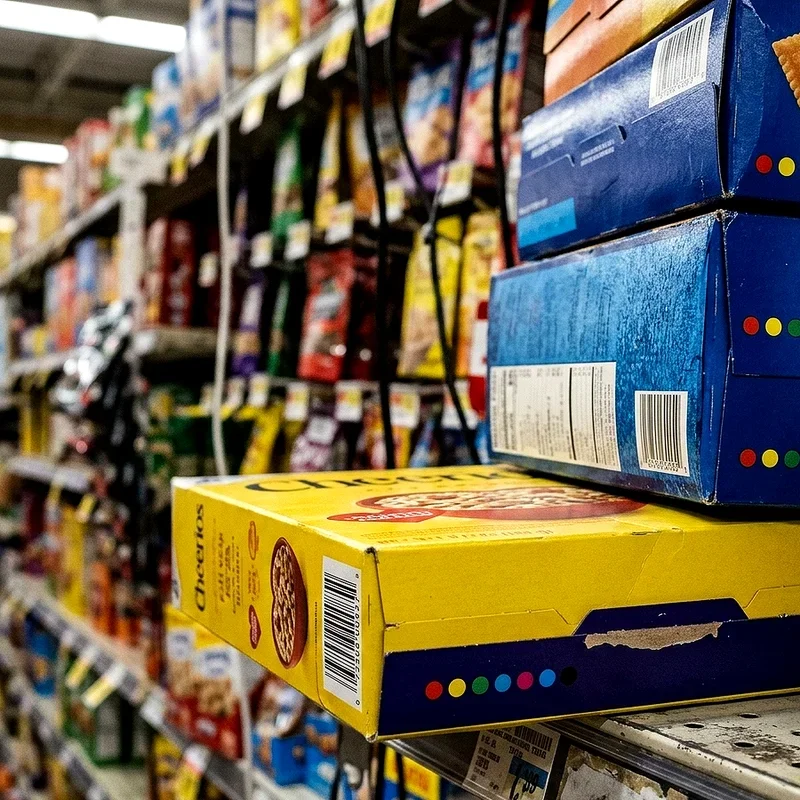
What Do the Colored Circles on Food Packages Mean?
Discover what do the colored circles on food packages mean. Learn about printer's color marks and why they appear on your grocery items.

You've probably noticed them a thousand times without giving them a second thought. Those tiny colored circles or squares sitting quietly at the edge of your cereal box or chip bag have caught your eye at some point. Maybe you were bored in the checkout line, or perhaps you were genuinely curious while munching on some crackers. Either way, you're not alone in wondering what on earth those little dots are doing there. Here's the thing. The internet loves a good conspiracy theory, and these innocent circles have sparked their fair share of wild claims. Some folks swear they indicate the quality of ingredients inside the package. Others believe they're secret codes revealing how much fruit is actually in your fruit snacks. Well, I hate to burst anyone's bubble, but the truth is far less exciting yet infinitely more practical.
The Printing Process Behind Those Mysterious Circles
Let's dive into the nitty gritty of how packaging actually gets printed. It's not as simple as hitting print on your home computer, that's for sure. Commercial printing, especially for food packaging, involves sophisticated machinery and precise color management systems.
Most food packaging uses a printing method called CMYK printing. This acronym stands for cyan, magenta, yellow, and key, which refers to black. These four colors combine in various proportions to create virtually every color you see on store shelves. When you look at a vibrant photo of strawberries on a jam jar or the deep blue of a water bottle label, you're actually seeing thousands of tiny dots of these four colors working together.
The colored circles on packages typically correspond to these CMYK colors. You might see four circles in cyan, magenta, yellow, and black arranged in a row. Sometimes there are additional colors if the package uses spot colors, which are premixed inks used for specific brand colors that need to be absolutely perfect every single time.
During the printing run, press operators keep a close eye on these color blocks. They use specialized tools called spectrophotometers or densitometers to measure the color values and ensure consistency throughout the entire print run. Imagine printing millions of packages and having the red on your logo gradually shift to orange by the end. That would be a branding nightmare, wouldn't it?

Why Color Consistency Matters More Than You'd Think
You might be wondering why anyone would care so much about a few shades of difference. Well, let me tell you, brand consistency is serious business in the food industry. Companies spend millions developing their visual identities, and they're not about to let sloppy printing mess that up.
Consider Coca Cola's iconic red or Cadbury's distinctive purple. These colors are instantly recognizable worldwide. If one batch of packaging came out slightly different, it could affect brand perception and even customer trust. People are surprisingly sensitive to subtle color variations, even if they can't consciously identify what's changed.
Beyond branding, color accuracy affects how appetizing food looks on the package. That juicy burger photo needs to look just right to trigger those hunger pangs as you walk down the grocery aisle. If the colors are off, the food might look unappetizing or even spoiled, which definitely won't help sales.
There's also the matter of regulatory compliance. Certain information on food packaging, like nutritional labels and allergen warnings, needs to be clearly legible. Color consistency ensures that text remains readable and that important information stands out as intended.
Common Misconceptions About What Do the Colored Circles on Food Packages Mean
The internet has spawned some pretty creative theories about these humble printing marks. Let's debunk a few of the most popular myths that have been circulating.
One widespread claim suggests that the circles indicate how much of a product is made from natural versus artificial ingredients. According to this theory, more colored circles mean more artificial ingredients. This is completely false. The number and arrangement of circles depend entirely on the printing process used, not the product's contents.
Another myth proposes that these marks reveal the nutritional quality of the food inside. Some versions claim that certain colors correspond to sugar content, fat levels, or preservatives. Again, this has no basis in reality whatsoever. Nutritional information is found on the nutrition facts panel, not in cryptic circle codes.
There's also been speculation that these marks are meant for inventory tracking or store pricing systems. While barcodes and other markings do serve those purposes, the colored circles are strictly for print quality control. They serve no function once the package leaves the printing facility.
Some people have even theorized that the marks contain hidden messages from manufacturers or government agencies. I appreciate a good conspiracy as much as the next person, but this one's just not true. The marks are mundane, practical tools with no hidden meanings.

The Technical Side of Process Control Patches
For those who enjoy technical details, let's explore how these color targets actually work in practice. The science behind them is pretty fascinating once you get into it.
Process control patches come in various forms depending on the printing technology being used. You'll find them on flexographic printing, which is common for flexible packaging like chip bags. They appear on offset lithography, used for cardboard boxes and cartons. They're also present on gravure printing, which handles high volume packaging runs.
Each colored patch serves as a reference point for specific ink densities. When operators measure these patches with their instruments, they're checking several key factors. Ink density tells them whether enough ink is being applied. Dot gain reveals how much the ink spreads when it hits the substrate. Trapping shows how well different colors are overlaying each other.
The patches are typically placed in the trim area of the packaging, which is the part that gets cut away or folded under during the manufacturing process. That's why you often see them on edges or near seams. They're designed to be functional during production but essentially invisible on the finished product sitting on store shelves.
Modern printing presses often have automated systems that continuously monitor these color blocks and make real time adjustments. This technology ensures remarkable consistency across millions of units, something that would have been impossible just a few decades ago.
Where Else You'll Find These Color Marks
Food packaging isn't the only place these printer's marks appear. Once you start looking for them, you'll notice them everywhere. It's like learning a new word and suddenly hearing it all the time.
Magazines and newspapers often have color bars running along their edges. Book covers feature similar marks during the printing process, though they're usually trimmed away. Cardboard boxes for electronics, toys, and household products display these same quality control features.
Even your humble pizza box has gone through this color calibration process. Those vibrant photos of pepperoni and melted cheese needed proper quality control to look so tempting. The same goes for frozen food boxes, beverage cartons, and pretty much any printed packaging you encounter.
Printed materials beyond packaging also use these techniques. Posters, billboards, and marketing materials all require color consistency. Professional photographers and graphic designers rely on similar color management systems when preparing files for print production.

The Evolution of Printing Quality Control
Printing technology has come a long way from the early days of movable type. The methods used to ensure color accuracy have evolved dramatically alongside improvements in printing machinery itself.
In the past, press operators relied heavily on their own eyes and experience to judge color quality. They'd hold up printed sheets to light, compare them to reference samples, and make adjustments based on intuition and skill. While experienced operators developed remarkable abilities, this approach had obvious limitations.
The introduction of color measurement devices revolutionized quality control in the printing industry. Densitometers first appeared in the mid twentieth century, allowing objective measurements of ink density. Spectrophotometers followed, enabling precise color matching to international standards.
Today's printing operations often use closed loop color control systems. These sophisticated setups continuously monitor color output and automatically adjust ink flow to maintain consistency. Some systems can detect and correct color drift before it becomes visible to the human eye.
Digital printing technologies have brought their own approaches to color management. While they don't always require the same physical color patches, they still rely on calibration systems to ensure accurate output. The fundamental challenge of achieving consistent, accurate color remains constant across all printing methods.
Conclusion
Those colorful circles on your food packages are nothing more than printer's quality control marks, used to ensure consistent colors during manufacturing. While internet myths have created elaborate theories about hidden meanings and secret codes, the reality is refreshingly straightforward. These marks help press operators maintain brand standards and produce appetizing, accurately colored packaging. So next time you spot these circles, you can smile knowing the truth behind them.
Read next: 15 Food Bar Ideas to Elevate Your Next Party Spread
Frequently Asked Questions
Q1. What do the colored circles on food packages mean exactly?
A: They are printer's marks used to check color accuracy during the packaging printing process.
Q2. Do these circles indicate food quality or ingredients?
A: No, they have nothing to do with food contents and only relate to print quality.
Q3. Why are the circles usually cyan, magenta, yellow, and black?
A: These are the four primary colors used in CMYK printing to create all other colors.
Q4. Should consumers pay attention to these colored marks when shopping?
A: No, these marks provide no useful information for consumers about the actual product inside.
Q5. Are these color circles found only on food packaging?
A: No, they appear on magazines, boxes, books, and virtually all commercially printed materials.
Stay up to date with our latest ideas!